
According to the United States Consumer Law Attorney Fee survey report
“Consumer Law is recognized as a specialty area of law1 dealing with
issues arising from transactions involving one or more persons acting as
individuals or as a family. It typically includes the legal fields of
bankruptcy, credit discrimination, consumer banking, warranty law, unfair
and deceptive acts and practices, and more narrow topics of consumer law
such as consumer protection rights enabled by specific statutes such as the
Fair Credit Reporting Act, the Uniform Consumer Sales Practices Act, state and federal lemon laws, and many others.”
We used the data published in this report to generate some simple charts.
The hourly rate in any consulting business or practice increases by the years of experience in the field.
1. How does the average attorney rate increase by years in practice?
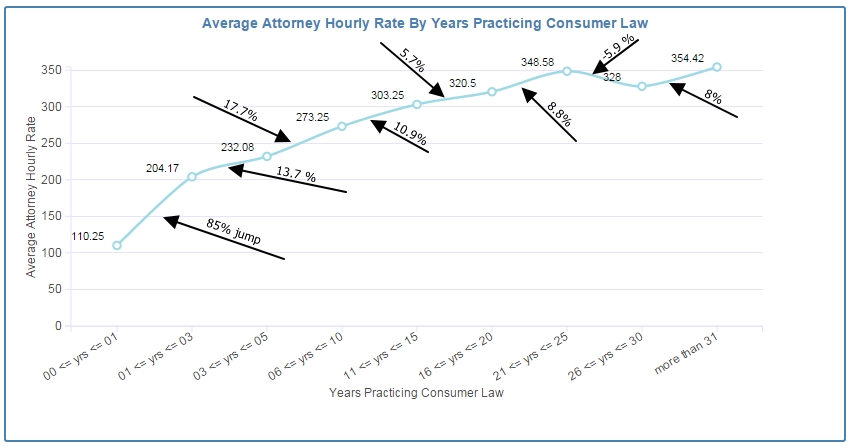
After the first year in practice, the average attorney rate increases by 85%. This rate is an average across all the regions.
2. Which state/region has the highest average attorney rates?
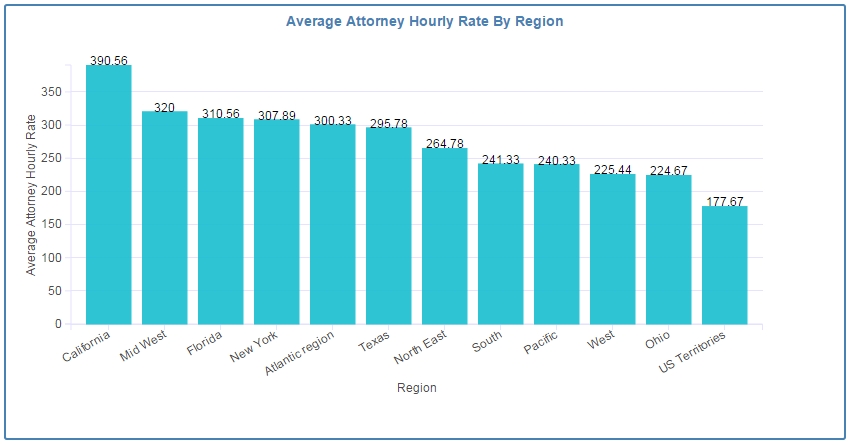
Note: This average rate is across all the years of practice.
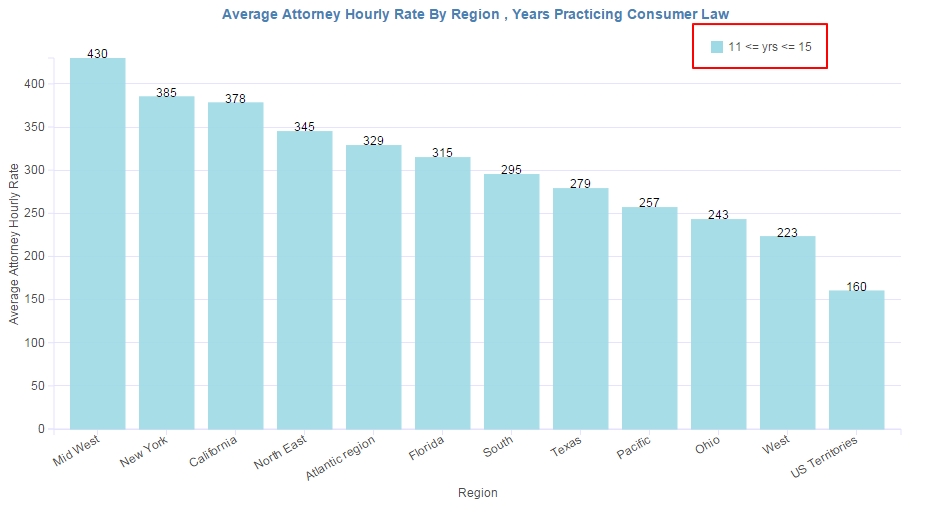
If we pick the median to be “11 and 15 years of practice” then Mid West ranks at the top and California ranks third.
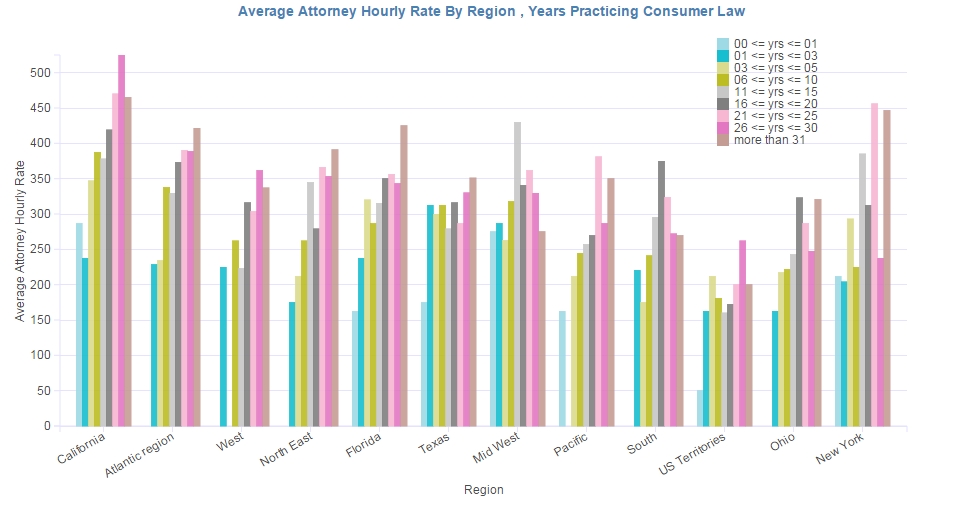
And here is the complete view with a vertical group bar and a pivot heat map
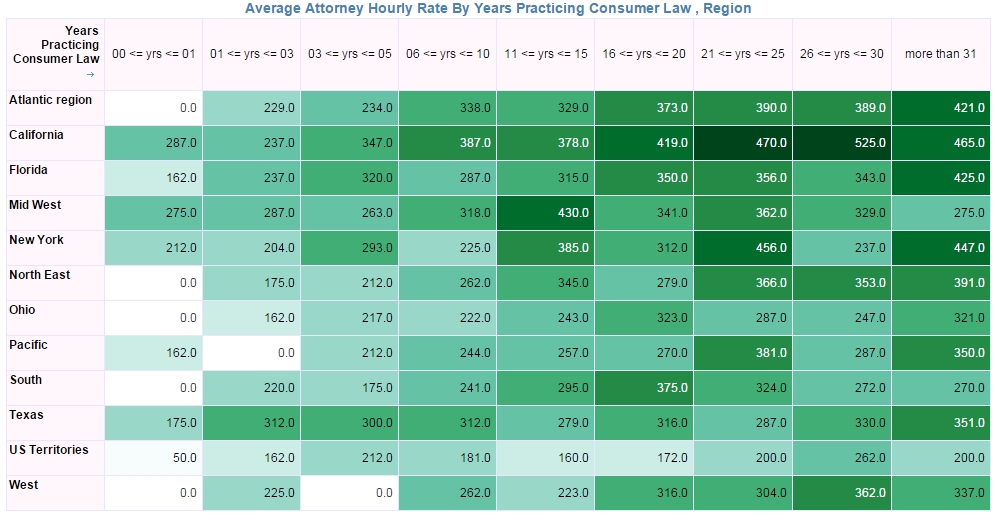
And here is the complete interactive dashboard report for US Consumer Attorney Law fee survey dashboard